
Which Memory Would You Keep? Review of The Lantern of Lost Memories

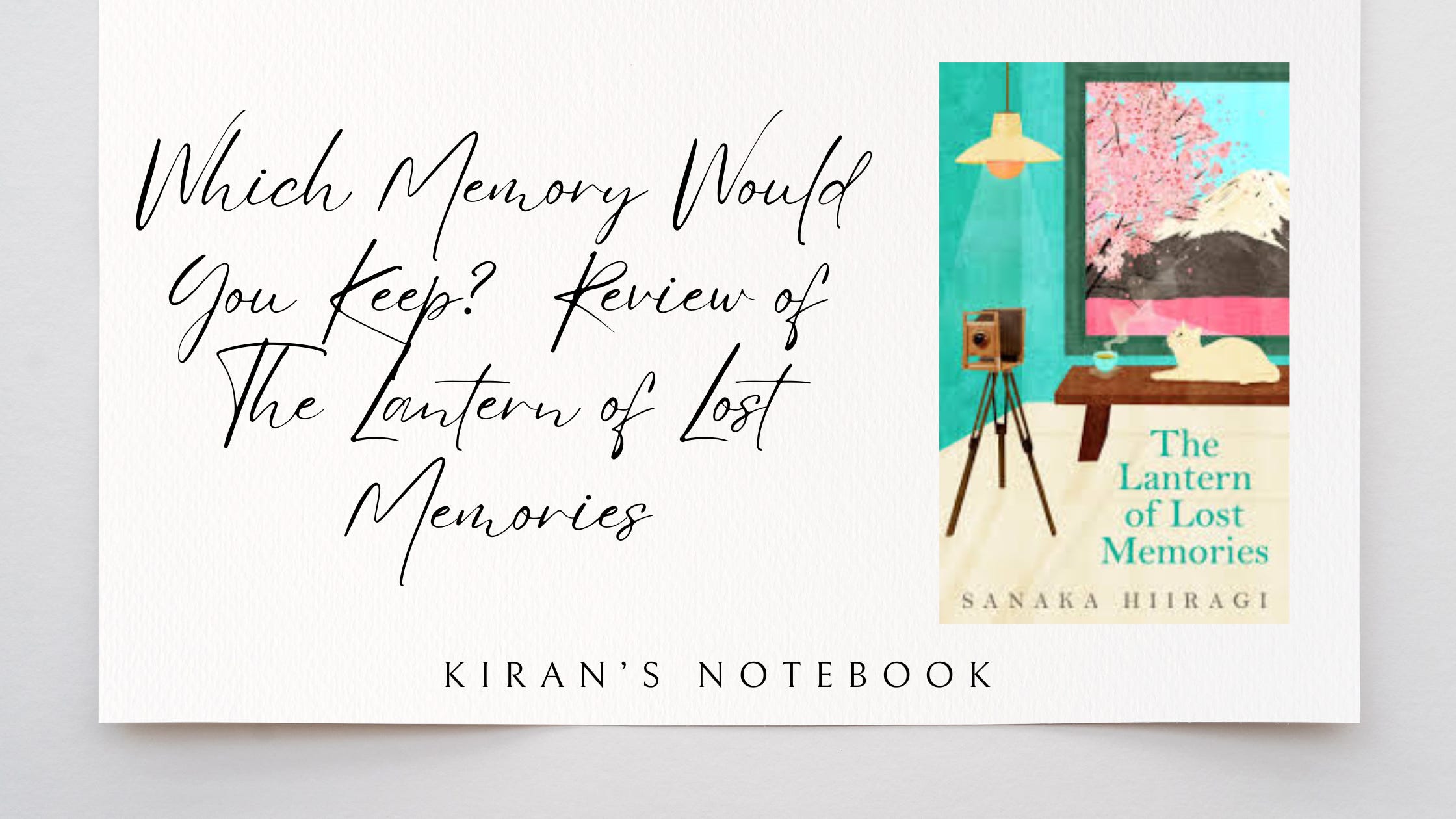
As this year began, I decided to make one little change in my life to improve my mental health. I removed all social media applications from my phone, and it was one of the best things I could have done (I still use social media, but it's not on my phone, and that makes a huge difference). Now, what do I do in those moments when I am bored and habitually pull my phone out for scrolling? I read. That’s how I am reading fiction these days, in bursts, in little moments while waiting for someone, standing in a queue. And though I don’t get an instant dopamine rush, I do get a sense of ease as I share my life with many fictional characters, the latest being Hirasaka from Sanaka Hiiragi’s novel The Lantern of Lost Memories.
While searching for another book, I stumbled upon this one. Something about the title drew me in, and I’m glad I picked it up. I later found out the book is from a tradition of writing called “comfort fiction.” Though I had heard the phrase “comfort reading” before, I wasn’t aware there’s a genre of books called “comfort fiction”—books that feel like home, books that you can turn to on a difficult day to feel some sense of warmth and ease. Though Hiiragi primarily writes in Japanese, this is her first novel in English, originally written in Japanese and has been translated into English by Jesse Kirkwood, exploring themes of memory, life, and death. Here’s the synopsis of the book that drew me in:
“One photograph, one treasured memory, one chance to go back . . .
If you could relive one day of your life, which would you choose? In a cozy photography studio in the mountains between this world and the next, someone is waking up as if from a dream. A kind man will hand them a hot cup of tea and gently explain that, having reached the end of their life, they have one final task…”
This kind man is Hirasaka, the protagonist of the story, who helps people transition to the other world after their deaths, and a particular task awaits his guests. Before moving on to the world beyond, they must choose one photograph per year from a collection spanning every day of their lives. It sounds like a daunting task, but Hirasaka is there, patiently explaining the process and offering a lovely hot tea and whatever the traveler might need or ask for. After picking a picture for each year one has lived, reminiscing over their lives, and curating the memories they would see before transitioning to the other world—the “lantern of memories,” the guests leave the studio for the world unknown.
The first passenger to the afterlife we meet is a woman named Hatsue, finding herself in the afterlife with Hirasaka, sorting through her 92 years of lived experiences. Hatsue was a primary school teacher and was passionate about kids—we get a glimpse into a life dedicated to service. The second guest is a complete contrast to Hatsue—forty-seven-year-old Waniguchi, who lived a life full of violence. He was a hardened criminal, but for Hirasaka, his task remains the same: to help his guests sort through their memories, explaining the process of the photo studio.
For both Hatsue and Waniguchi, Hirasaka has one day of an outing planned. As they sift through their photographs, they find one photograph faded. As Hirasaka explains, this is the memory they have cherished deeply and have thought about again and again, making it fade. The guests' last task is to return to the day of their faded photograph and take the picture again, thus watching the most cherished moment of their lives from afar.
While this is the process for the guests, we also get to know that Hirasaka doesn’t have any memories of his own and is constantly wondering what kind of life he might have led—hence the title of the book, The Lantern of Lost Memories. We see Hirasaka struggling throughout the story, wondering what kind of person he might have been. What was his life like? All he has is a single photograph of himself in a forest, smiling gently at the camera.
The third guest who visits Hirasaka holds the key to his lost memories. We get a glimpse into Hirasaka’s past, but I will not reveal that. Instead I will leave you with a question I have asked myself and would like to ask my readers: If you were to reach Hirasaka’s studio, which picture of yours do you think would be faded? Which memory of yours have you cherished so profoundly that you have thought about it again and again?
Here’s mine. I was around six years old, traveling with my father on a winter night, about to reach Delhi. We were on the Mandor Express, the train I still take to travel to and from home. As we approached Delhi, the TT (train ticket examiner) started shouting, 'New Delhi has arrived! The six-year-old me woke up my father, who was fast asleep, and as we hurriedly deboarded the train, my father was gleaming with pride at how smart his daughter was—a story he told many people after that. This is one of the few memories of him I have and one I cherish deeply.
Which one would be yours?
Really loved that sweet anecdote you shared at the end of the review! :)